
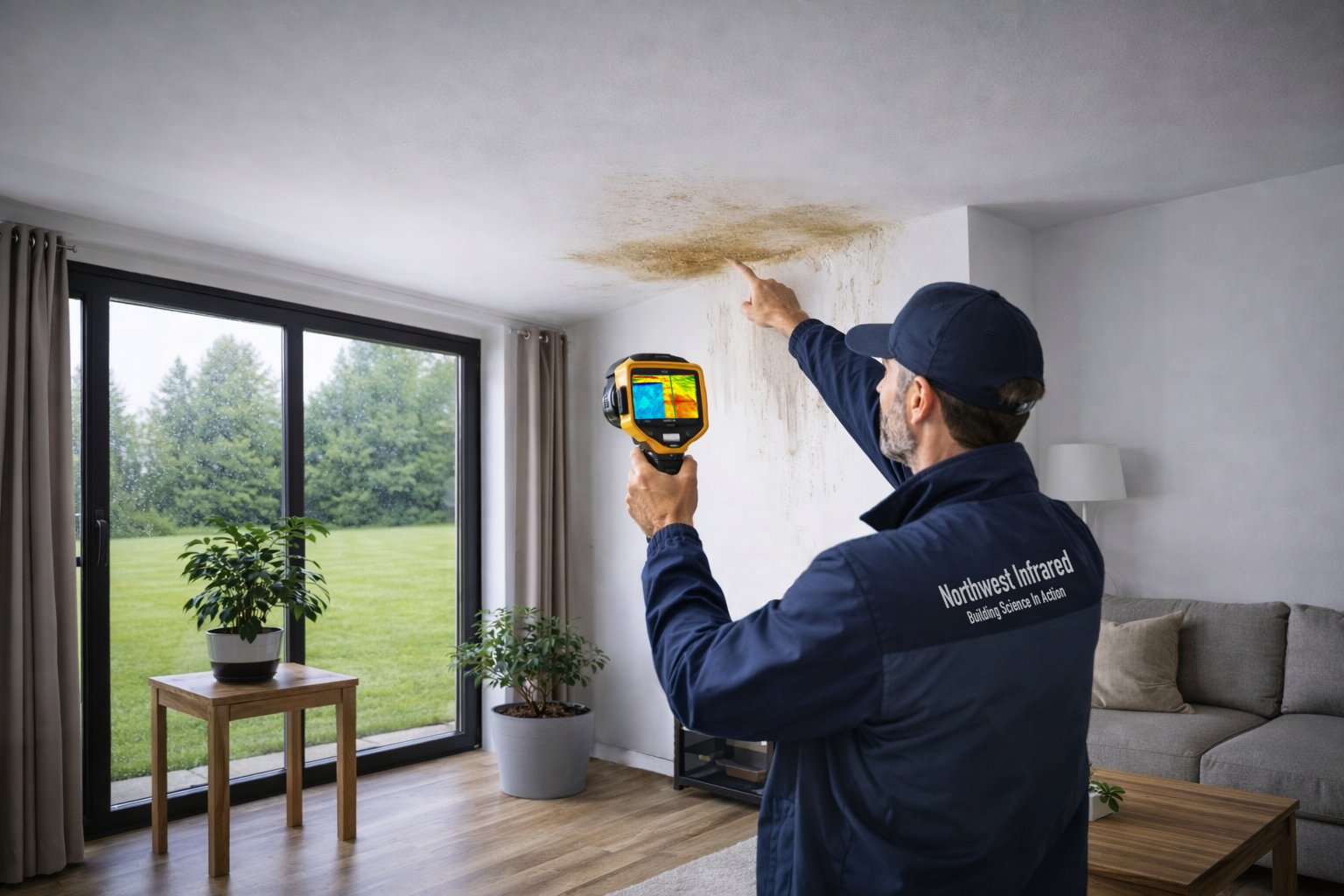
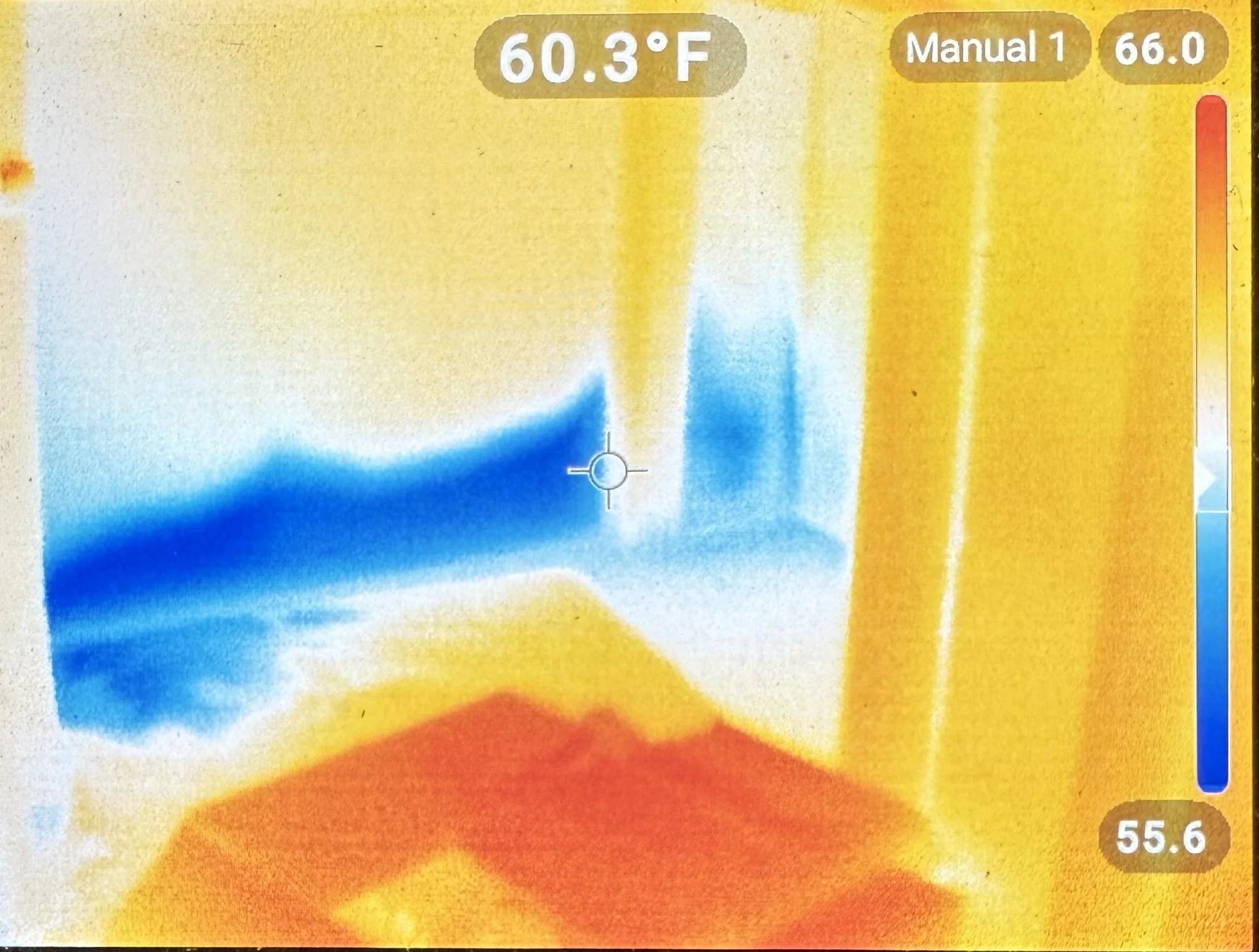
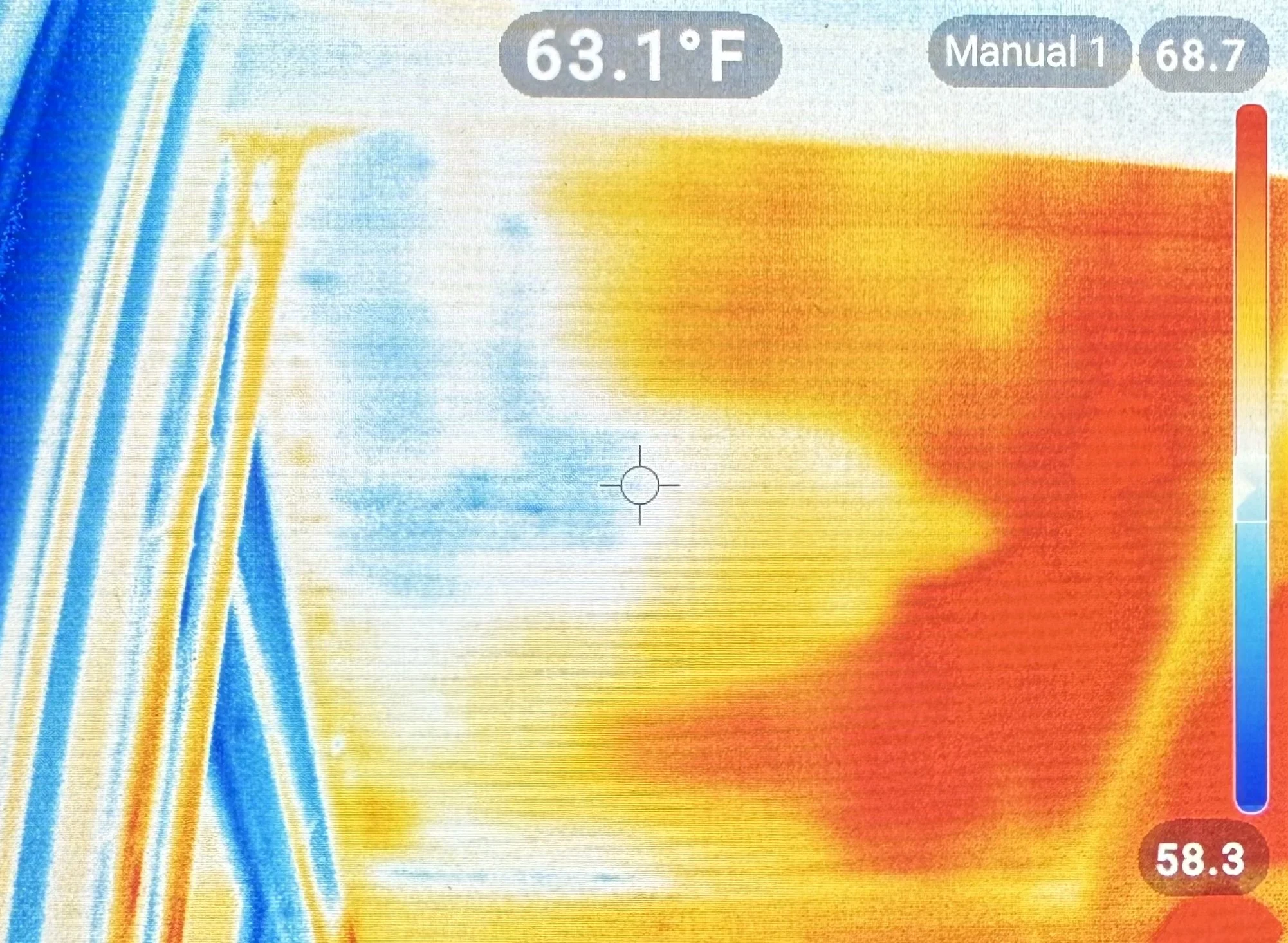
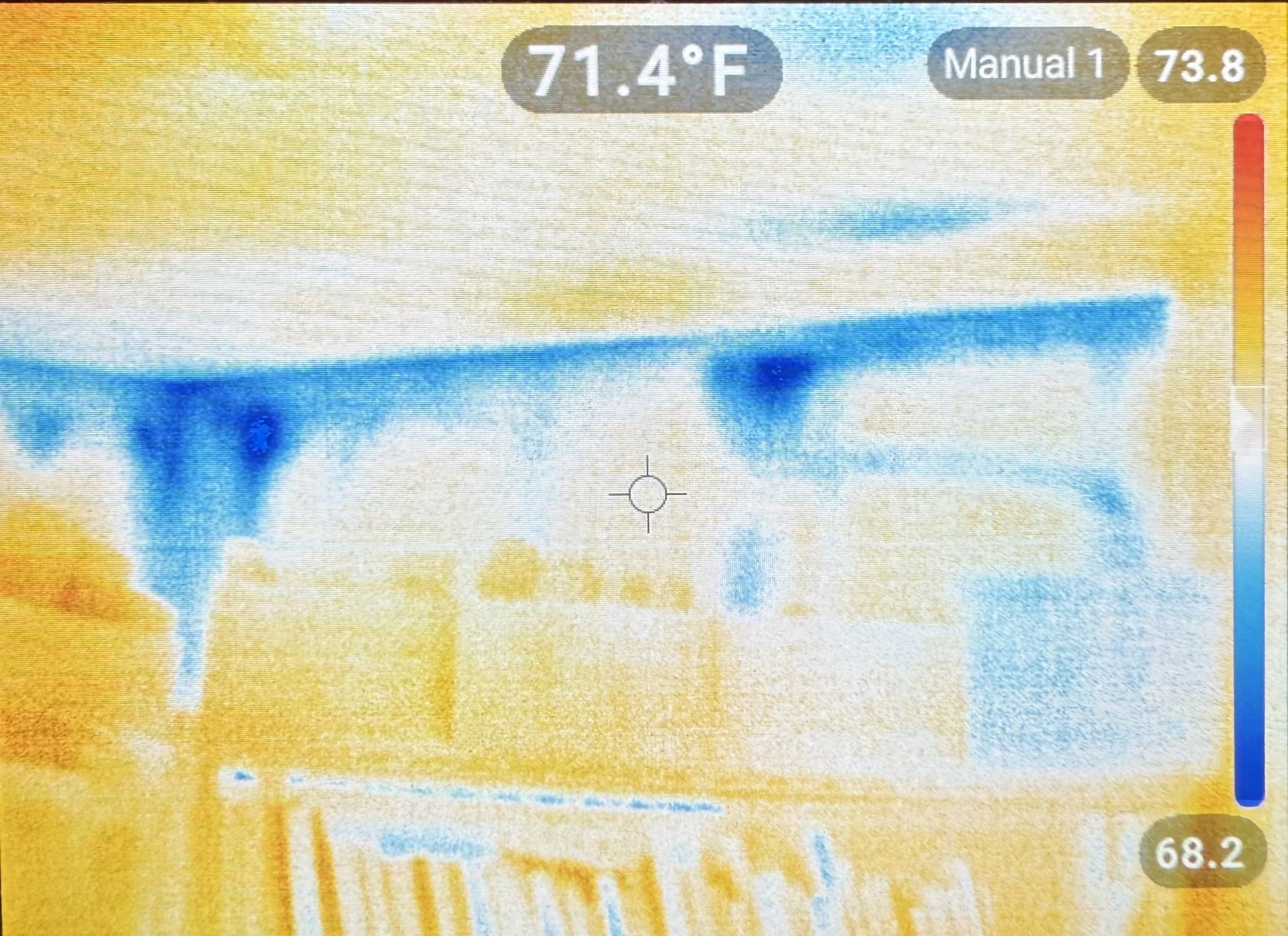
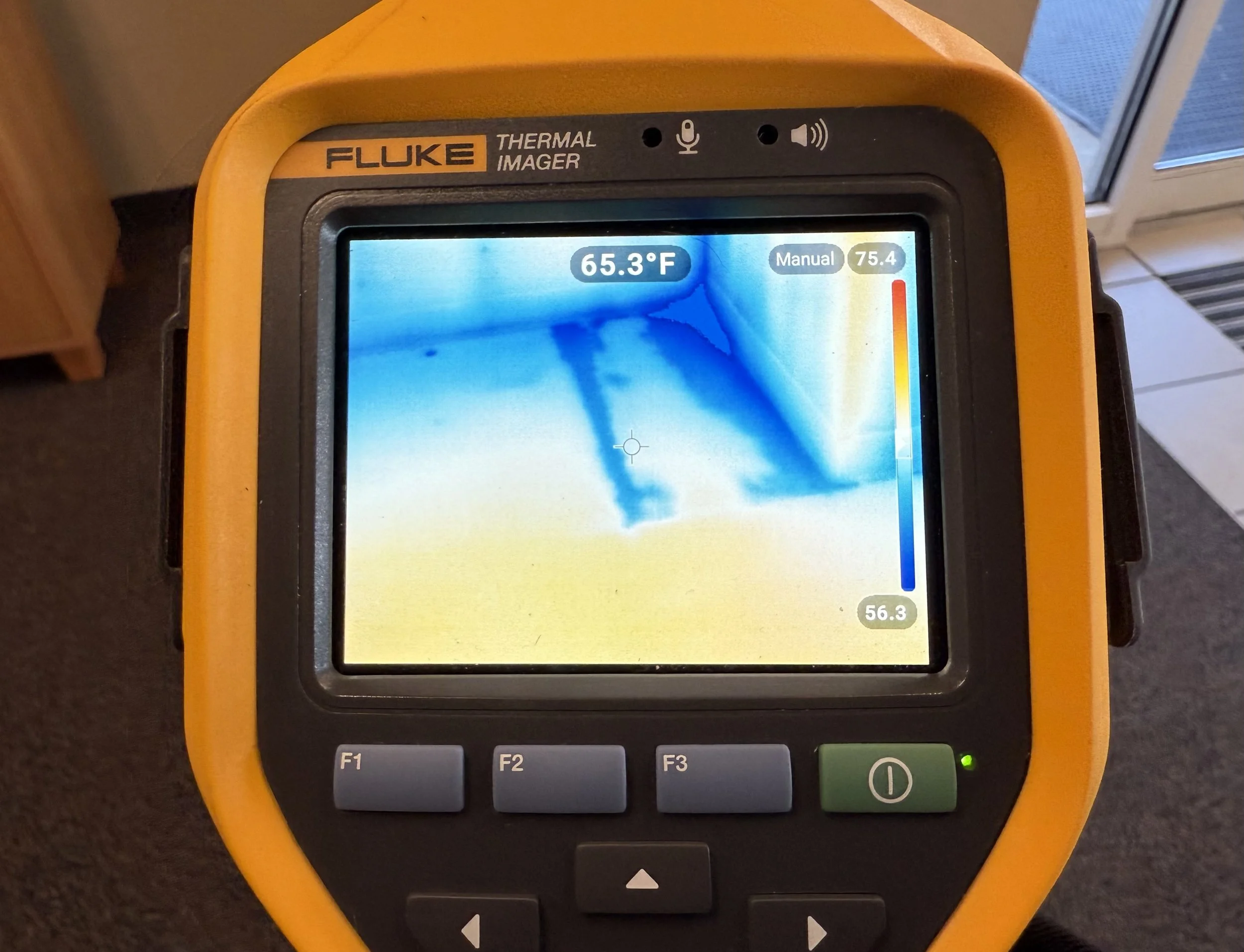
Infrared thermography is a fast and non-destructive technology that can accurately track down sources of moisture in the buildings using an infrared camera.
Moisture often changes the thermal properties of building materials, allowing it to be detected as temperature variations during an inspection. This makes it possible to locate leaks, moisture intrusion, and areas of concern without opening walls or causing damage.
Infrared Thermography
For Moisture Intrusion
How Do You Know If You Have Too Much Humidity?
The first step is recognizing that there may be an issue. Excess indoor humidity often develops gradually and can go unnoticed until it begins to affect comfort, building materials, or indoor air quality.
Early indicators may include a persistent musty or “wet dog” odor, which can suggest elevated moisture levels or hidden microbial growth. The indoor environment may feel damp or muggy, even when temperatures are relatively mild. These conditions are often the result of excess water vapor accumulating in the air without adequate ventilation or drying potential.
As humidity levels increase, more visible and measurable signs may appear, including:
Condensation on windows and glass surfaces, especially during cooler weather
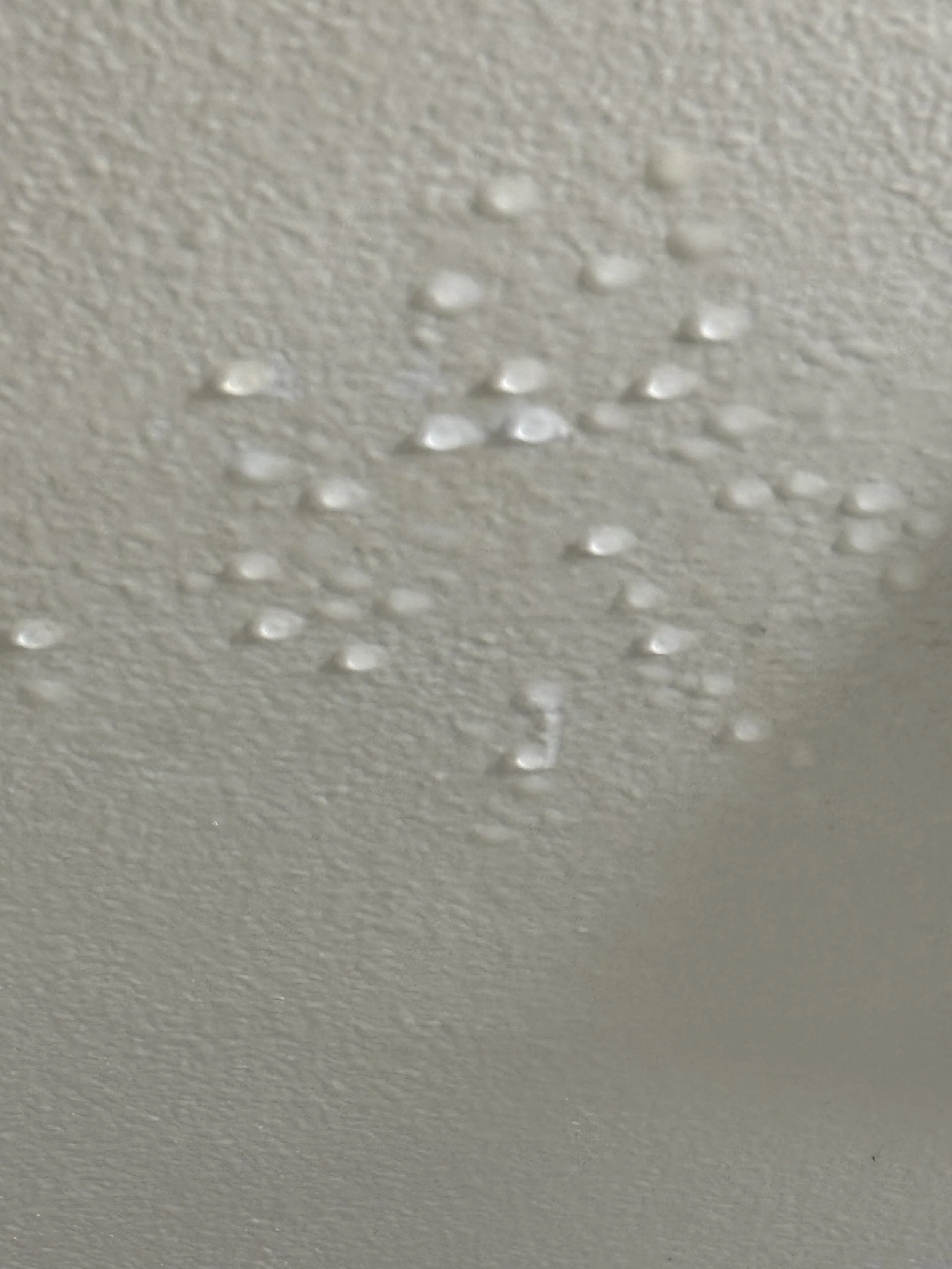
Water droplets forming on ceilings, walls, or other cool surfaces
Rust staining or water trails on drywall and finishes
Corrosion on metal components such as hinges, fasteners, or electrical fixtures
Peeling paint, swelling wood, or deteriorating materials
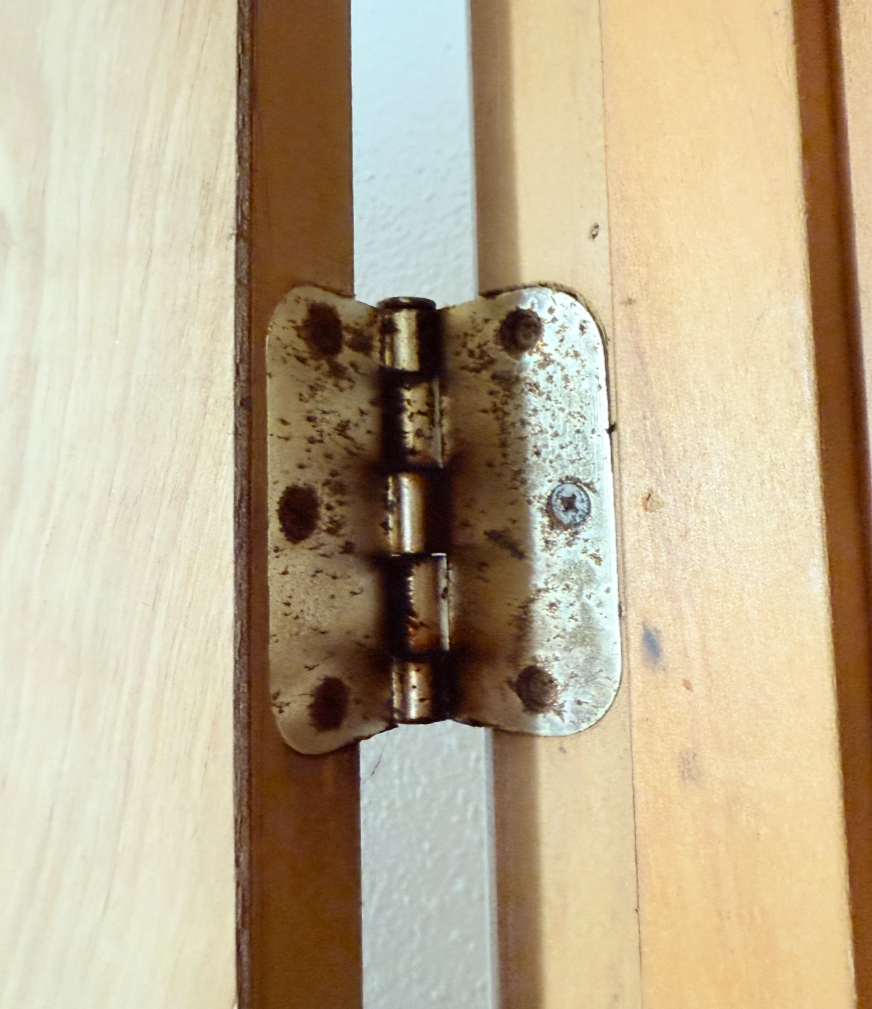
These issues occur when warm, moisture-laden air comes into contact with cooler surfaces and reaches its dew point, causing water vapor to condense into liquid. Repeated or sustained condensation can lead to material degradation and create conditions favorable for mold growth.
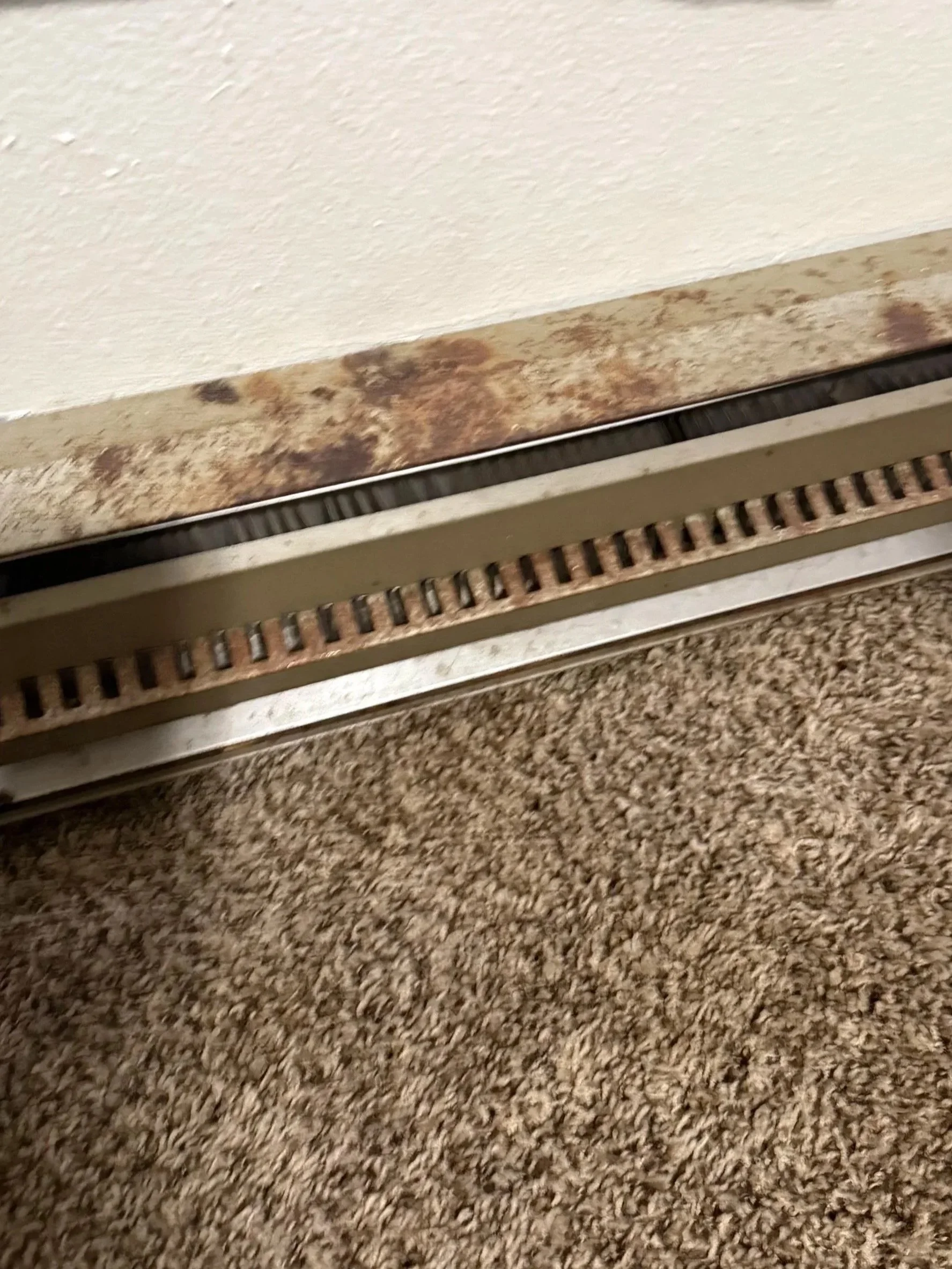
In many cases, high indoor humidity is influenced by a combination of factors, including:
Occupant activities (cooking, bathing, drying clothes indoors)
Poor ventilation or improperly functioning exhaust systems
Air leakage allowing humid air into wall or attic spaces
Moisture intrusion from roofs, walls, or foundations
Unbalanced HVAC systems or lack of humidity control
From a building science perspective, maintaining proper humidity levels is critical for both occupant comfort and building durability. Ideally, indoor relative humidity should less than 50% and remain within that range to prevent condensation and moisture related damage.
Recognizing these signs early allows for proper evaluation and correction of the underlying causes, helping to protect the structure and maintain a healthy indoor environment.
Water intrusion can lead to costly damage if left unaddressed. If you’re seeing signs of moisture, staining, or mold, schedule an inspection today and take the first step toward protecting your building.
Moisture Intrusion Inspections
Conducting a moisture intrusion inspection involves a systematic evaluation of the building using a combination of thermal imaging, interior and exterior assessments, and building science principles. The process includes identifying potential pathways for water entry, such as roof assemblies, wall systems, window and door interfaces, and mechanical penetrations.
Infrared thermography is used to detect temperature differentials associated with moisture, while visual inspection and moisture verification techniques help confirm areas of concern. The inspection also considers environmental conditions, building materials, and construction details that influence how water and water vapor move through the structure.
By analyzing these factors, we can trace moisture pathways, distinguish between active and historic issues, and identify the underlying causes of intrusion. This comprehensive approach provides accurate, actionable information to support targeted repairs, reduce unnecessary demolition, and improve the long term durability and performance of the building.
Service Area
Grays Harbor County